
Accounting is the systematic process of recording, classifying, summarizing, analyzing, and reporting financial transactions of a business, organization, or individual. It is often called the “language of business” because it provides clear financial information to help owners, managers, investors, banks, and regulators make informed decisions.
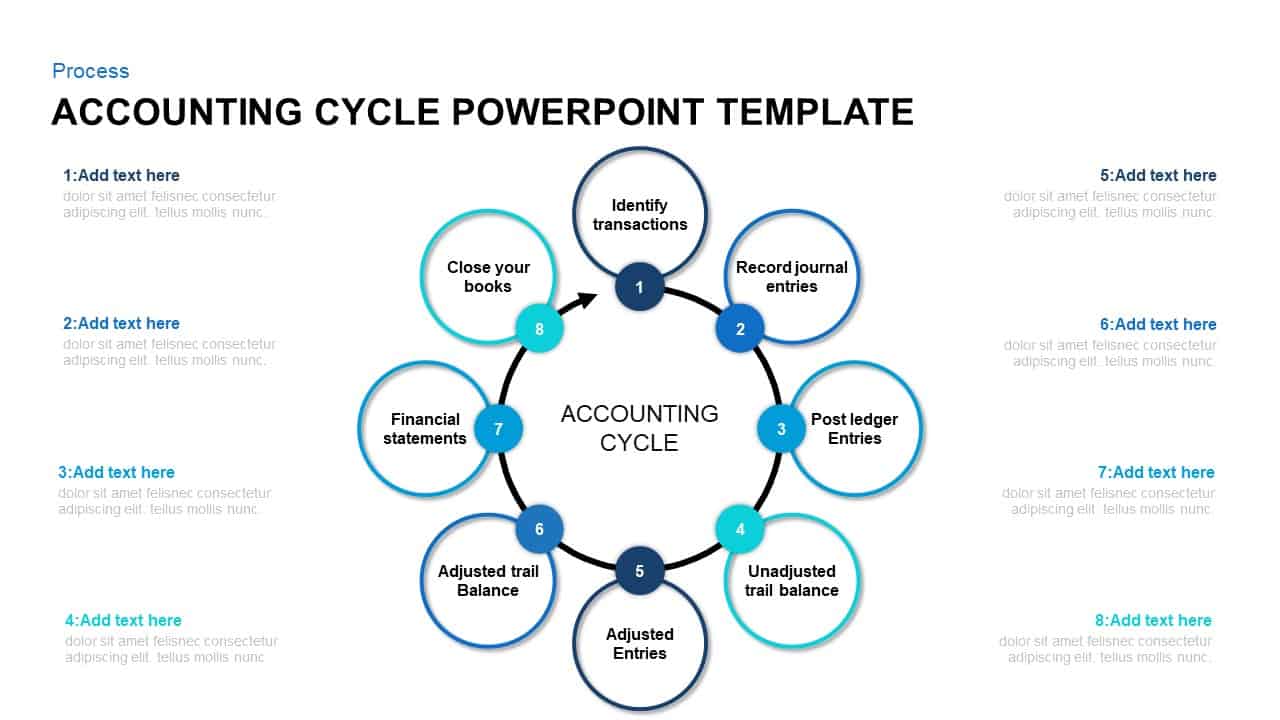
8-Step Circular Accounting Cycle Diagram Template for PowerPoint & Google Slides
The Accounting Cycle (8 Key Steps)
Accounting follows a continuous cycle to turn raw transactions into useful reports:
- Identify transactions
- Record journal entries
- Post to ledger
- Prepare unadjusted trial balance
- Make adjusting entries
- Prepare adjusted trial balance
- Prepare financial statements
- Close the books
This cycle repeats every accounting period (usually monthly, quarterly, or yearly).
Fundamental Accounting Equation
Every transaction must keep the books in balance using this core equation:
Assets=Liabilities+Owner’s Equity
- Assets = What the business owns (cash, inventory, equipment, buildings).
- Liabilities = What the business owes (loans, unpaid bills, taxes).
- Owner’s Equity = Owner’s investment + profits – withdrawals.
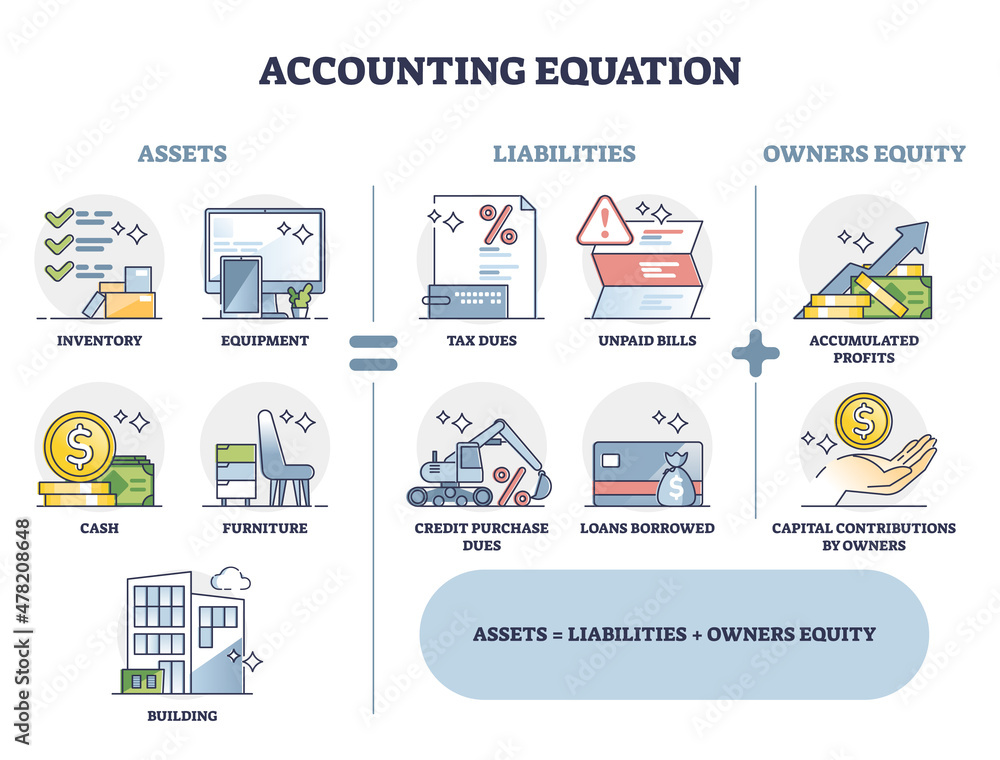
Accounting equation with assets, liabilities and owner equity outline diagram. Labeled educational scheme with mathematical balance sheet explanation vector illustration. Business profit calculation. Stock-vektor | Adobe Stock
Double-Entry Bookkeeping
The foundation of modern accounting: Every transaction affects at least two accounts (one debit and one credit) so the equation always balances.
Simple Example (Buy inventory for cash ₨50,000):
- Debit Inventory (asset increases)
- Credit Cash (asset decreases)
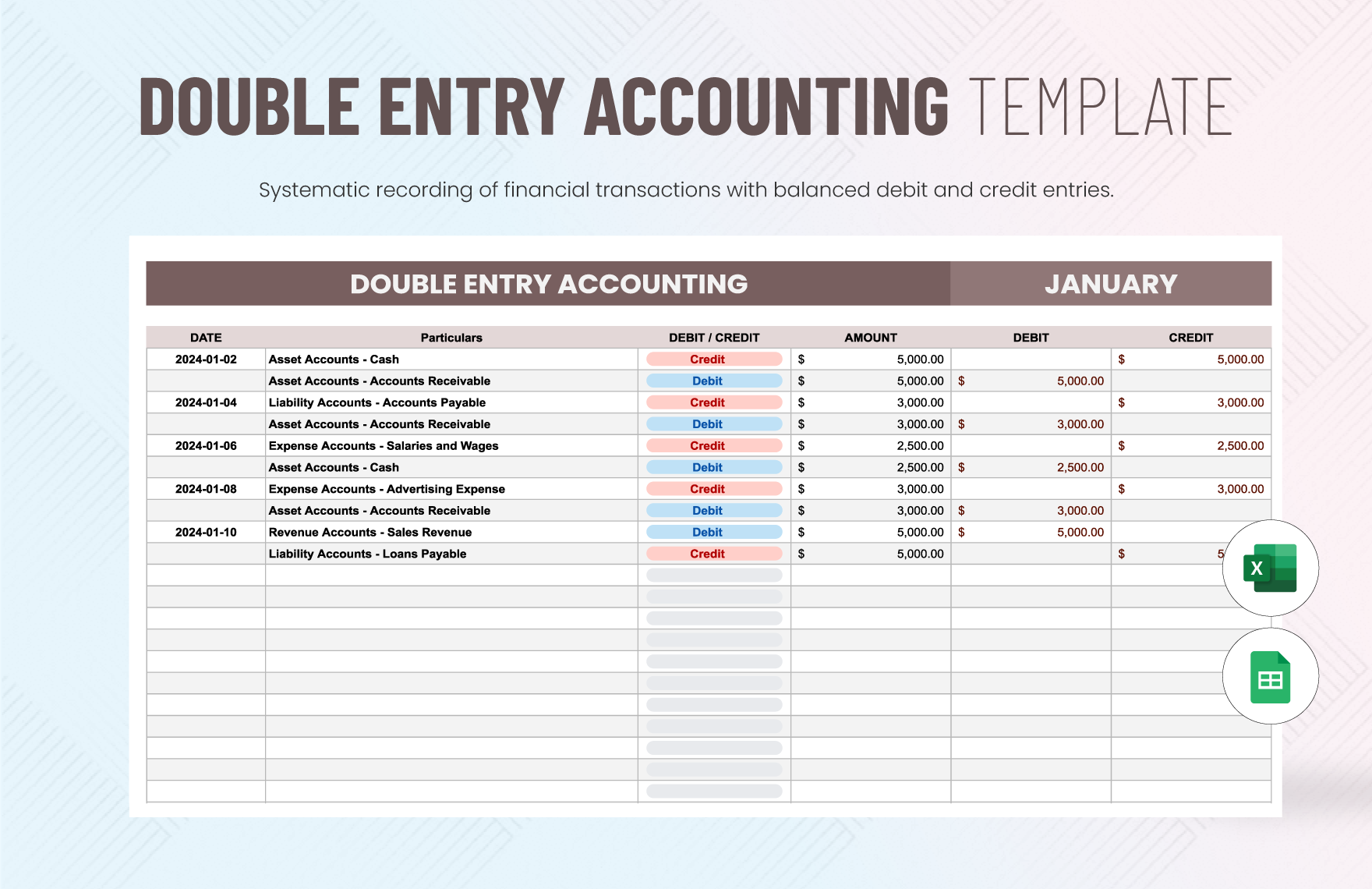
Double Entry Accounting Template in Excel, Google Sheets – Download | Template.net
Main Branches of Accounting
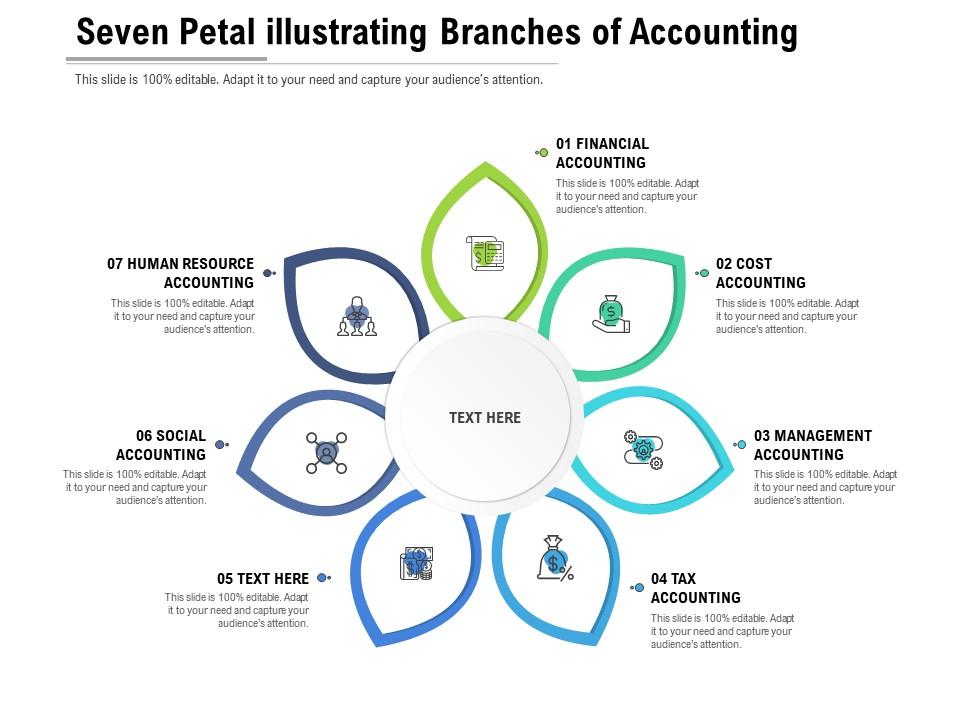
Top 10 Branches Of Accounting PowerPoint Presentation Templates in 2026
- Financial Accounting → Prepares reports for external users (investors, banks, tax authorities).
- Managerial Accounting → Internal reports for planning, budgeting, and decision-making.
- Cost Accounting → Tracks production costs (especially useful for manufacturing).
- Tax Accounting → Follows tax laws (FBR rules in Pakistan).
- Auditing → Independent check of records.
- Forensic Accounting → Investigates fraud.
Key Financial Statements
These are the final outputs of the accounting process:
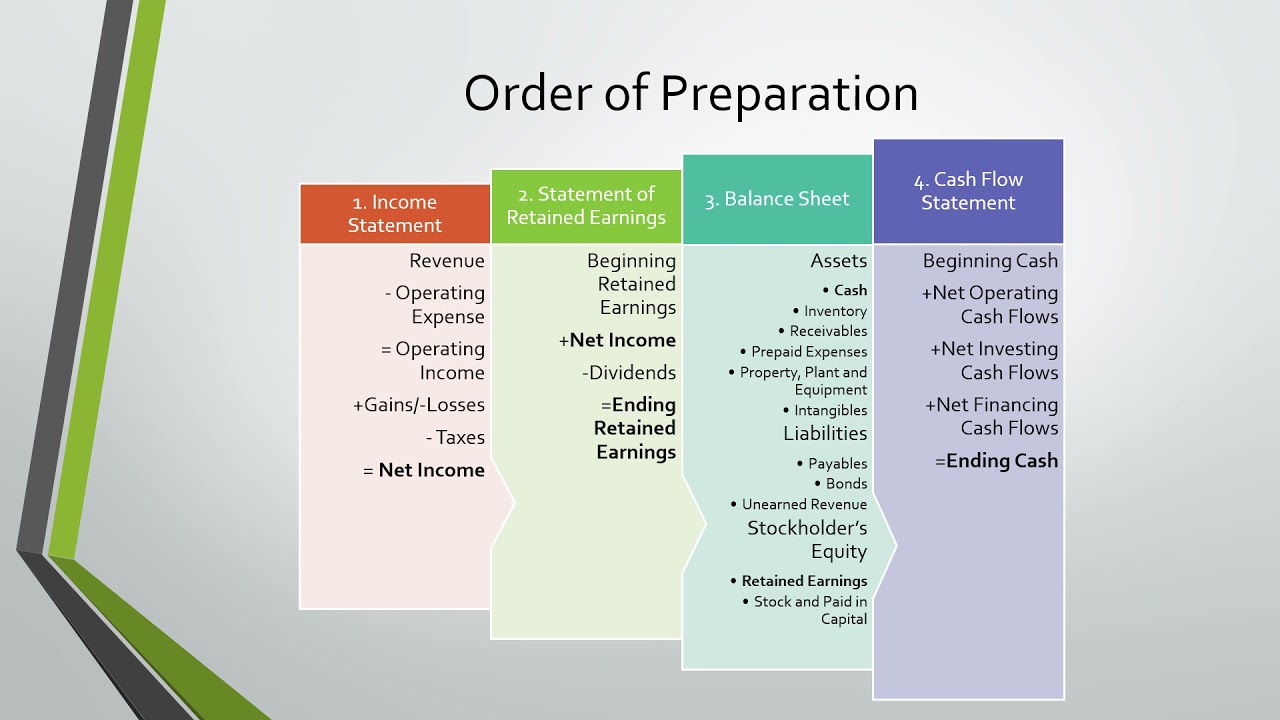
The 4 Financial Statements
- Income Statement (Profit & Loss) → Shows revenue, expenses, and profit over a period.
- Balance Sheet → Snapshot of assets, liabilities, and equity at a specific date.
- Cash Flow Statement → Tracks actual cash inflows and outflows.
- Statement of Changes in Equity → Shows how owner’s equity changed.
Why Accounting Matters in Pakistan
- Legally required under the Companies Act 2017 and SECP/FBR rules.
- Essential for tax filing, bank loans, investor funding, and business growth.
- Modern tools (QuickBooks, Xero, Tally, Busy, Marg) make it faster and more accurate.
Accounting helps businesses stay profitable, compliant, and transparent. If you want examples of journal entries, how to read a balance sheet, accounting for small Pakistani businesses, or career paths (CA, ACCA, etc.), just let me know!